Who is offered the glucose tolerance test, how food and activity help control blood sugar, and why follow-up after birth matters, based on NHS and NICE guidance.
Gestational diabetes is high blood sugar (glucose) that develops during pregnancy and usually disappears after giving birth. It's more common in the second or third trimester.
It does not usually cause any symptoms, so most cases are found through screening (NHS).
Who is offered screening?
You should be offered screening if any of these apply to you:
your BMI is above 30;
you previously had a baby who weighed 4.5kg (10lb) or more at birth;
you had gestational diabetes in a previous pregnancy;
one of your parents or siblings has diabetes;
you are of south Asian, Black, African-Caribbean or Middle Eastern origin;
you are over 40;
you've had a gastric bypass or other weight-loss surgery.
Your midwife will ask about these at your booking appointment, at around 8 to 12 weeks.
How is it tested?
The test is an oral glucose tolerance test (OGTT), done between 24 and 28 weeks. You have a blood test in the morning after not eating for 8 to 10 hours, then a glucose drink, then another blood test 2 hours later.
If you've had gestational diabetes before, you'll be offered an OGTT earlier, soon after your booking appointment.
Why does it matter?
Most women with gestational diabetes have otherwise normal pregnancies with healthy babies. But high blood sugar can increase the risk of problems such as a larger baby, premature birth, pre-eclampsia, and low blood sugar in the baby after birth. Detecting and managing it early reduces these risks.
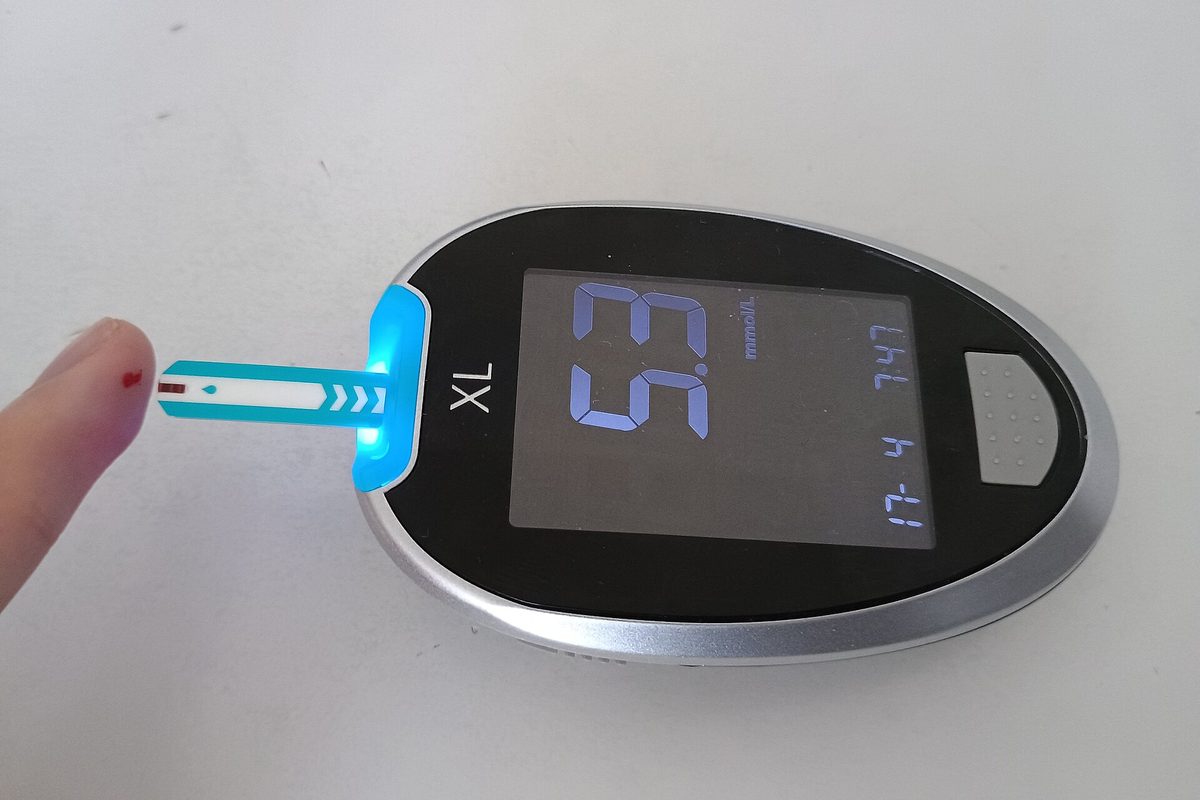
Checking your blood sugar with a home testing kit.
Being more active if you can: walking, swimming and prenatal yoga can help reduce blood sugar. Tell your midwife before starting something new.
Medicine such as metformin or insulin for some people, if diet and activity are not enough (NICE).
You'll be monitored more closely during pregnancy and birth. The NHS advises giving birth before 41 weeks, so induction or a caesarean may be recommended if labour does not start by then.
After the birth
Gestational diabetes normally goes away after birth, but it increases your risk of type 2 diabetes later. You should have a blood test 6 to 13 weeks after giving birth, then once a year if the result is normal. Have these tests even if you feel well.
FAQs
Does gestational diabetes go away after birth?
Usually, yes. But follow-up testing is important because your risk of type 2 diabetes, and of gestational diabetes in a future pregnancy, is higher.
Do I need to stop eating fruit?
No. Fruit can be part of a balanced diet; portions and timing may be tailored to your readings.
Can gestational diabetes cause symptoms?
Rarely. If blood sugar gets too high, you may notice increased thirst, needing to wee more, a dry mouth, tiredness or blurred vision. These are also common in pregnancy, so mention them to your midwife.